
Skip to content
Peraltum, real estate in ParaguayPeraltum, real estate in Paraguay
ES · EN · DEPropertiesAreasHow to buy in ParaguayBuying from abroadAbout usProperty shopperContactSell
PropertiesAreasHow to buy in ParaguayBuying from abroadAbout usProperty shopperContactSell
Show simulated conversion in
  1. Home
  2. How to buy in Paraguay
  3. Property taxes and closing costs in Paraguay

Property taxes and closing costs in Paraguay

What you pay when you buy property in Paraguay, the annual property tax and how rent is taxed, with a worked example for a US$150,000 purchase.

PAuthor: PeraltumPublished on 13 October 2026
Calculator, keys and miniature houses on a table

Before you buy property in Paraguay, it helps to know three blocks of costs: what you pay at the purchase, the property tax due every year and, if you rent the property out, income tax and VAT. The tax on a gain when you sell is covered in a separate article. Guaraní amounts are converted at the Central Bank of Paraguay's rate of 12 October 2026, about Gs. 5,720 to the US dollar.

Closing costs: what you pay when you buy

Paraguay has no national property transfer tax or stamp duty. Some online summaries mention a 1.5% transfer tax; that figure matches the effective VAT on a sale by a company, and it only applies in that case. At the purchase you mainly pay:

  • VAT (IVA, impuesto al valor agregado), only if the seller is registered for VAT on that sale, for example a company or a developer selling new apartments. The rate is 5% on a base of 30% of the price, which comes to 1.5% of the price. If you buy from an individual selling their own home, the sale does not normally carry VAT. Ask whether the price includes it.
  • The registration fee of the Registro Unificado Nacional (RUN), the body that since 14 January 2026 has combined the property registry and the cadastre: 0.85% of the higher of the deed price and the property's fiscal value.
  • The municipal transfer tax: 3 per thousand (0.3%) in Asunción and 2 per thousand (0.2%) in the municipalities governed by Law 620/1976, on the price and never below the fiscal value.
  • The fee of the escribano, the Paraguayan public notary who authorises the deed. The statutory scale (Law 1307/1987) falls by bands, and for deeds above Gs. 200 million (about US$35,000) it is 0.75% of the amount, plus 10% VAT. Real quotes vary with the work involved, so ask for one in writing.

Peraltum

A Paraguayan family company. Selected properties and a person who answers.

Properties

  • View properties
  • Areas
  • Tell us what you need
  • Sell

Peraltum

  • How to buy in Paraguay
  • Buying from abroad
  • About us
  • Property shopper
  • Contact

Legal information

  • Legal notice
  • Privacy policy
  • Cookie policy
© Peraltum · A Paraguayan family companyES · EN · DE
  • Certificates, such as the one showing the property tax is paid and the cadastral certificate, without which the escribano cannot authorise the deed.
  • By custom, the buyer pays the costs of the deed and registration, although the parties can agree otherwise. The seller pays their own income tax on the sale.

    Example: a US$150,000 purchase

    Say you buy an apartment in Asunción for US$150,000 from a private individual, and its fiscal value is below the price. The figures are approximate:

    • RUN registration (0.85%): US$1,275.
    • Municipal transfer tax (3 per thousand): US$450. In a municipality with the 2 per thousand rate, US$300.
    • Escribano's fee on the statutory scale (0.75%): US$1,125, plus US$112.50 of VAT.
    • Approximate total: about US$2,960, close to 2% of the price, plus certificates.

    If the seller is a developer and the price does not include VAT, add US$2,250 (1.5%): about US$5,210 in total, around 3.5% of the price.

    The annual property tax

    As long as you own the property you pay the property tax (impuesto inmobiliario) every year: 1% of its fiscal value. Rural properties of less than 5 hectares that are the owner's only property and are used for farming pay 0.5%. The tax falls on all property located in Paraguay, whether the owner lives in the country or not.

    The fiscal value is not the market price. It is set by the DNIT (Dirección Nacional de Ingresos Tributarios, the national tax authority) using cadastral data and approved every year by decree. For 2026, Decree 5181/2025 raised fiscal values by 4.1%, the inflation measured by the Central Bank over the previous twelve months. The tax is collected by the municipality where the property is located.

    For every Gs. 100 million of fiscal value (about US$17,500), the tax is Gs. 1 million a year (about US$175). To know what you will pay, ask the seller for the latest bill. Also:

    • The tax falls due on 1 January, so whoever owns the property that day owes the year. In a sale, the year's tax must be paid in full before the deed; how buyer and seller share it is agreed between them.
    • The Municipal Organic Law allows each municipality to offer discounts of up to 12% for paying on time.
    • If you buy an urban plot and do not build, a vacant land surcharge applies: 20% of the tax in the first five years of ownership, rising by bands to 50% between years 15 and 20.
    • Rural properties carry another surcharge that grows with the owner's total area in each region. An individual with up to 50 hectares in the Eastern Region pays 0%.

    Renting it out while living in Paraguay

    If you are tax resident in Paraguay and rent out the property in your own name, the rent is taxed under the IRP (impuesto a la renta personal, personal income tax) as capital income, at 8%. You choose the base:

    • 50% of the rent received, without proving expenses.
    • The rent minus the property tax and documented maintenance, management and administration expenses.

    With the first option you pay, in practice, 4% of the gross rent: US$40 for every US$1,000 received. You file once a year, in March.

    The law also treats an individual who rents out property as a VAT taxpayer. The rate is 5% if the property is let only as a home and 10% in other cases, such as a shop or an office, and it applies to each month's rent. For all this you must register in the RUC (Paraguay's taxpayer registry) and issue invoices.

    If the property belongs to a Paraguayan company, the rent falls under the IRE (impuesto a la renta empresarial, corporate income tax), at 10% of net income, and also carries VAT.

    Renting it out from abroad

    If you are not resident, the rent is taxed under the INR (impuesto a la renta de no residentes, non-resident income tax). The law sets net income at 50% of the rent and applies a 15% rate: 7.5% of the gross rent, or US$75 for every US$1,000. If the tenant is a company established in Paraguay, it withholds the tax when it pays you; your agent, attorney or representative in the country also acts as a withholding agent. The rent carries VAT as well; how to pay it while living abroad is something to settle with an accountant before you sign the lease.

    As a general rule, Paraguay taxes income from Paraguayan sources: income from activities carried out, property located or rights used in the country. So rent from a property in Paraguay is taxed there, wherever you live.

    Taxes in your home country

    Paying tax in Paraguay does not settle what you may owe at home.

    • United States: US citizens are taxed on their worldwide income, even if they live abroad, so rent from a Paraguayan property, or a gain when you sell it, also counts for your US return. The United States has no income tax treaty with Paraguay. How Paraguayan tax is treated on your US return is a question for a US tax professional, and Paraguay's rates are not the only ones that apply to you.
    • United Kingdom, Canada and Australia: none of them has a double taxation treaty with Paraguay. If you are tax resident in one of them, ask an adviser there how rent or a gain from Paraguay is taxed.

    If you are weighing up a purchase, the Peraltum team can guide you through the process or, with the Property shopper service, look for the property on your behalf as your buyer's agent.

    Sources

    • Law 6380/2019 on the modernisation and simplification of the national tax system
    • DNIT, guides to the IRP on capital income (2024) and to the INR
    • Law 125/1991 on property tax, amended by Law 5513/2015
    • Law 7424/2025 on the Registro Unificado Nacional, and Decree 5181/2025
    • Judiciary of Paraguay, guide to RUN fees (2026)
    • Law 1307/1987, notarial fee scale
    • Law 881/1981, Law 620/1976 and Law 3966/2010, Municipal Organic Law
    • Central Bank of Paraguay, exchange rates (October 2026)
    • IRS, US citizens and resident aliens abroad, and United States income tax treaties (2026)
    • HMRC, Double Taxation Relief Manual (2026); Department of Finance Canada, tax treaties (2026); Australian Treasury, income tax treaties (2026)

    This article is for information only and is up to date as of October 2026. Before you sign, a Paraguayan public notary (escribano) and, if needed, an accountant should review your specific case.

    Cover photo: Jakub Żerdzicki on Unsplash.

    Shall we help you search?

    Tell us what you are looking for and we will suggest options that fit.

    Tell us what you need

    More articles

    • Hand holding house keys next to a door

      How to buy property in Paraguay as a foreigner

      Check title and debts, sign before an escribano, pay and register, or buy from the US, UK, Canada or Australia with an apostilled power of attorney.

      PAuthor: PeraltumPublished on 13 October 2026
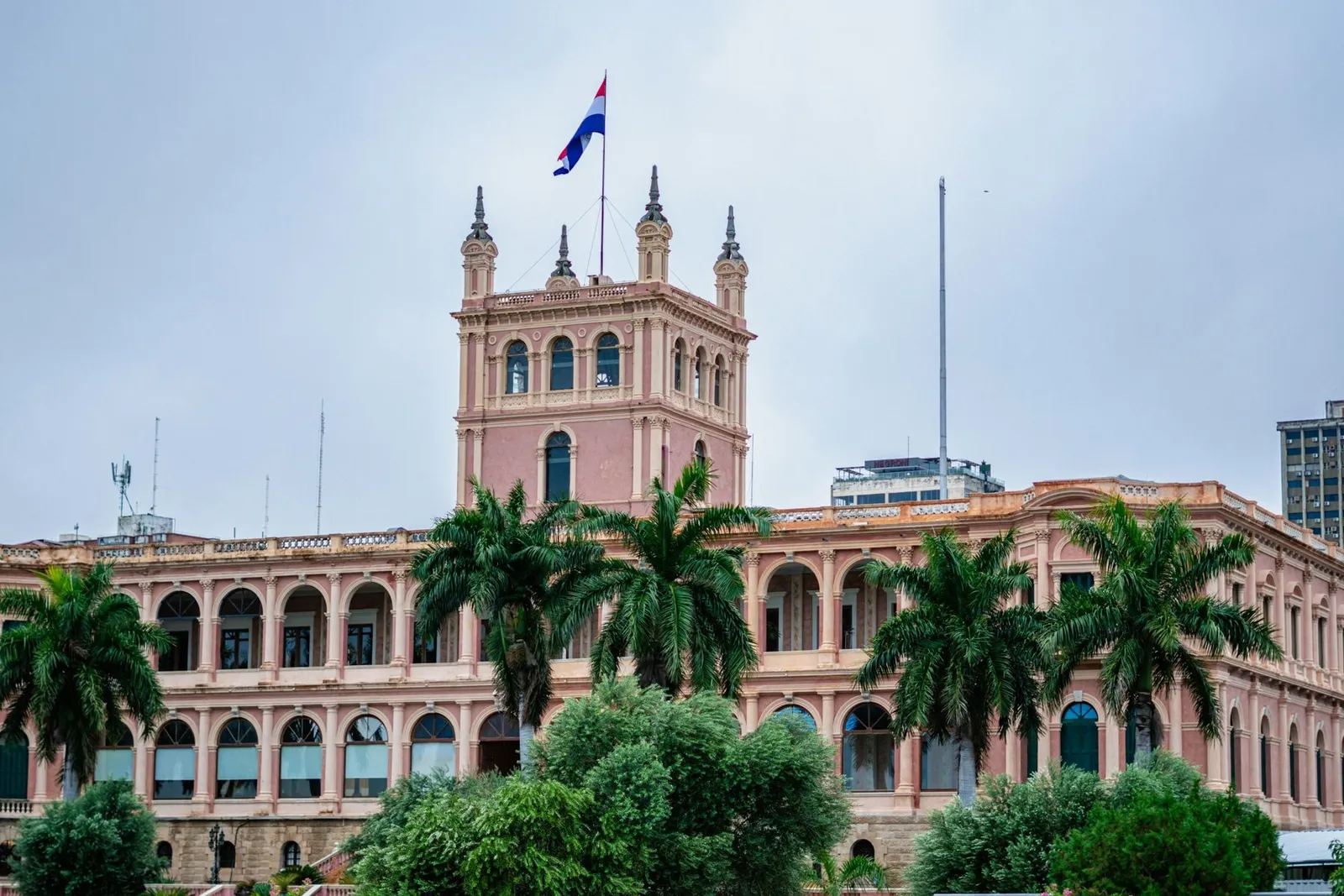
    • López Palace, seat of government, in Asunción

      Can foreigners buy property in Paraguay?

      Yes, with a passport and without residency. What Laws 117/91 and 2532/2005 say, how the border zone rule works and what buying does not give you.

      PAuthor: PeraltumPublished on 13 October 2026