

Skip to content
Peraltum, real estate in ParaguayPeraltum, real estate in Paraguay
ES · EN · DEPropertiesAreasHow to buy in ParaguayBuying from abroadAbout usProperty shopperContactSell
PropertiesAreasHow to buy in ParaguayBuying from abroadAbout usProperty shopperContactSell
Show simulated conversion in
  1. Home
  2. How to buy in Paraguay
  3. How to buy property in Paraguay as a foreigner

How to buy property in Paraguay as a foreigner

Check title and debts, sign before an escribano, pay and register, or buy from the US, UK, Canada or Australia with an apostilled power of attorney.

PAuthor: PeraltumPublished on 13 October 2026
Hand holding house keys next to a door

Buying property in Paraguay always follows the same order: check who owns it and what charges it carries, sign a purchase agreement with a deposit, sign the deed before a Paraguayan public notary (escribano), pay, and register the purchase. The order is the same from Asunción or from Texas; what changes when you are abroad is how you identify yourself, how you send the money and who signs for you.

Since 14 January 2026, Law 7424/2025 has merged the public registries, the national cadastre and the surveying department into one body, the Registro Unificado Nacional (RUN).

Who can buy and what you need

Foreigners can buy property on the same terms as Paraguayans: Investment Law 117/91 gives foreign investors the same rights as nationals and guarantees the right of ownership. You do not need residency. You identify yourself with a Paraguayan identity card (cédula) if you have one, or with a valid passport; the RUN's forms accept owners with a foreign document.

Under anti-money-laundering rules, the real estate agency must ask for your nationality, address, contact details, your RUC (Paraguay's taxpayer number) or proof that you are not a taxpayer, and a statement of where the funds come from. The escribano also answers to SEPRELAD, the anti-money-laundering authority, and will tell you how to handle the RUC if you have no Paraguayan document.

The main restriction by nationality is in Law 2532/2005: in the 50 km strip along the borders, citizens of Argentina, Brazil and Bolivia, and companies mostly owned by them, cannot own rural property without an executive decree, with exceptions such as permanent residents of Paraguay (Law 2647/2005). If you are not from one of those countries, it does not affect you. Our article on whether foreigners can buy property in Paraguay explains it.

Peraltum

A Paraguayan family company. Selected properties and a person who answers.

Properties

  • View properties
  • Areas
  • Tell us what you need
  • Sell

Peraltum

  • How to buy in Paraguay
  • Buying from abroad
  • About us
  • Property shopper
  • Contact

Legal information

  • Legal notice
  • Privacy policy
  • Cookie policy
© Peraltum · A Paraguayan family companyES · EN · DE

Check the property before paying a deposit

The first document is the RUN's title report (informe de condición de dominio). A lawyer or an escribano can request it online through the SIGRE system. It shows the registered owner, any charges such as a mortgage, any restrictions and other registered rights. It helps you decide, but it does not reserve anything in your favour.

Then the physical side. The property is identified by its registry number (finca or matrícula) and its cadastral account (cuenta corriente catastral or padrón), plus a new Unique Cadastral and Registry Identification Code. The measurements and boundaries in the title should match the plan. The certificate the escribano will request states whether the title overlaps with others and whether the property lies in the border security zone.

Two more checks:

  • Taxes: the escribano cannot authorise the deed without the municipal certificate showing that the annual property tax (impuesto inmobiliario) and its surcharges are paid (Law 125/91, art. 64).
  • Possession: visit the property and find out who occupies it. Under the Civil Code, twenty years of uninterrupted, unopposed possession can lead to ownership.

The purchase agreement and the deposit

If everything is in order, the parties sign a boleto de compraventa, a private purchase agreement. Under the Civil Code (art. 701) it is not yet the sale itself: it obliges both parties to sign the public deed. It should set out the price, the currency, how payment is made, the deadline for the deed, any conditions and what happens to the deposit.

The deposit (seña) has its own rules (art. 723). Say you buy an apartment for US$150,000 and pay a deposit of US$15,000; the parties agree the amount, as the law does not set one. If you back out, you lose the US$15,000. If the seller backs out, they return it plus the same amount again, US$30,000 in total. If the sale goes ahead, the deposit counts towards the price and you pay the remaining US$135,000 at the deed.

The escribano, the deed and registration

A property sale must be made by public deed (escritura pública), authorised by an escribano público (Civil Code, art. 700). This is not the same as a US notary public, who acts as an impartial witness to signatures: Paraguayan escribanos hold a university degree as notaries, and those who authorise deeds hold a notarial register granted by the Supreme Court after a competitive exam (Code of Judicial Organisation, arts. 101 and 102). The law requires an escribano for the deed but does not oblige you to hire a lawyer as well. Choose an escribano you trust from the start. Their tasks include:

  • Requesting from the RUN the cadastral and registry certificate (certificado catastro registral inmobiliario), which only an escribano can request. It brings the physical and legal data together and reserves priority for your transaction for 30 calendar days.
  • Obtaining the municipal certificate that the property tax is paid.
  • If someone signs under a power of attorney, checking in the Registry of Powers of Attorney that it is registered and has not been revoked.

Once everything is in order, the deed is signed and the balance paid. The deed is then filed with the RUN for registration, by the escribano, the seller or the buyer. Ownership passes by contract, but it only takes effect against third parties once the title is registered (Civil Code, art. 1968).

Law 7424/2025 caps the RUN's times at 15 working days for certificates and reports and 30 working days to register a title (art. 77). If every step took the maximum, about three months would pass from the certificate request to registration, plus the time needed to gather documents and funds. These are legal ceilings, not guaranteed times.

Paying in US dollars and proving where the money comes from

Paraguay does not restrict money coming into or leaving the country (Law 117/91, art. 6), so you can transfer funds from home. If the price is set in US dollars, the boleto and the deed should say so, along with how you will pay. The prudent route is a bank transfer to an account in the seller's name. If you earn in another currency, the exchange rate on the day of the transfer sets what the property costs you.

Gather the documents that show where the money comes from before you move it: bank statements, the deed from the sale of another home or a loan agreement. SEPRELAD's rules for the real estate sector (Resolution 201/2020) list an offer to pay most or all of the price in cash as a warning sign.

If you buy from a company or a developer, the sale may carry VAT (IVA); ask whether the price includes it. We cover purchase costs and taxes in a separate article.

Buying from abroad with a power of attorney

You can travel to sign, or give a power of attorney to someone you trust in Paraguay. Buying through someone else requires a special power (Civil Code, art. 884) granted in a public deed (art. 700). Ask the escribano in Paraguay to draft the text before you sign it in front of a notary at home, so that it meets Paraguayan requirements. It should identify the property and state what your representative may do: sign the boleto and the deed, pay the price and apply for registration.

Paraguay has applied the Hague Apostille Convention since 30 August 2014. The United States, the United Kingdom and Australia are also parties, and so is Canada since 11 January 2024, so Canadian documents no longer need consular legalisation for Paraguay. The power then needs an apostille in the country where it was signed:

  • United States: generally the Secretary of State of the state where the notary is commissioned.
  • United Kingdom: the Legalisation Office of the Foreign, Commonwealth and Development Office.
  • Canada: Global Affairs Canada or, for documents from some provinces, the provincial authority.
  • Australia: the Department of Foreign Affairs and Trade.

If it is not in Spanish, it must be translated. In Paraguay, the escribano registers it in the Registry of Powers of Attorney, now part of the RUN; without that registration the power has no effect (Code of Judicial Organisation, arts. 349 and 352).

The Peraltum team can guide you through each step or, with the Property shopper service, act as your buyer's agent and search on your behalf.

Sources

  • Law 7424/2025 on the Registro Unificado Nacional (2026)
  • Civil Code, Law 1183/1985
  • Code of Judicial Organisation, Law 879/1981
  • Laws 2532/2005 and 2647/2005 on the border security zone
  • Law 117/1991 on Investments
  • Law 125/1991 on property tax
  • SEPRELAD, Resolution 201/2020
  • Hague Conference, Apostille Convention status and competent authorities (2026)
  • US Department of State, Investment Climate Statement: Paraguay (2025)
  • South Dakota Secretary of State, Notary Public Handbook (2026)

This article is for information only and is up to date as of October 2026. Before you sign, a Paraguayan public notary (escribano) and, if needed, an accountant should review your specific case.

Cover photo: Maria Ziegler on Unsplash.

Shall we help you search?

Tell us what you are looking for and we will suggest options that fit.

Tell us what you need

More articles

  • Calculator, keys and miniature houses on a table

    Property taxes and closing costs in Paraguay

    What you pay when you buy property in Paraguay, the annual property tax and how rent is taxed, with a worked example for a US$150,000 purchase.

    PAuthor: PeraltumPublished on 13 October 2026
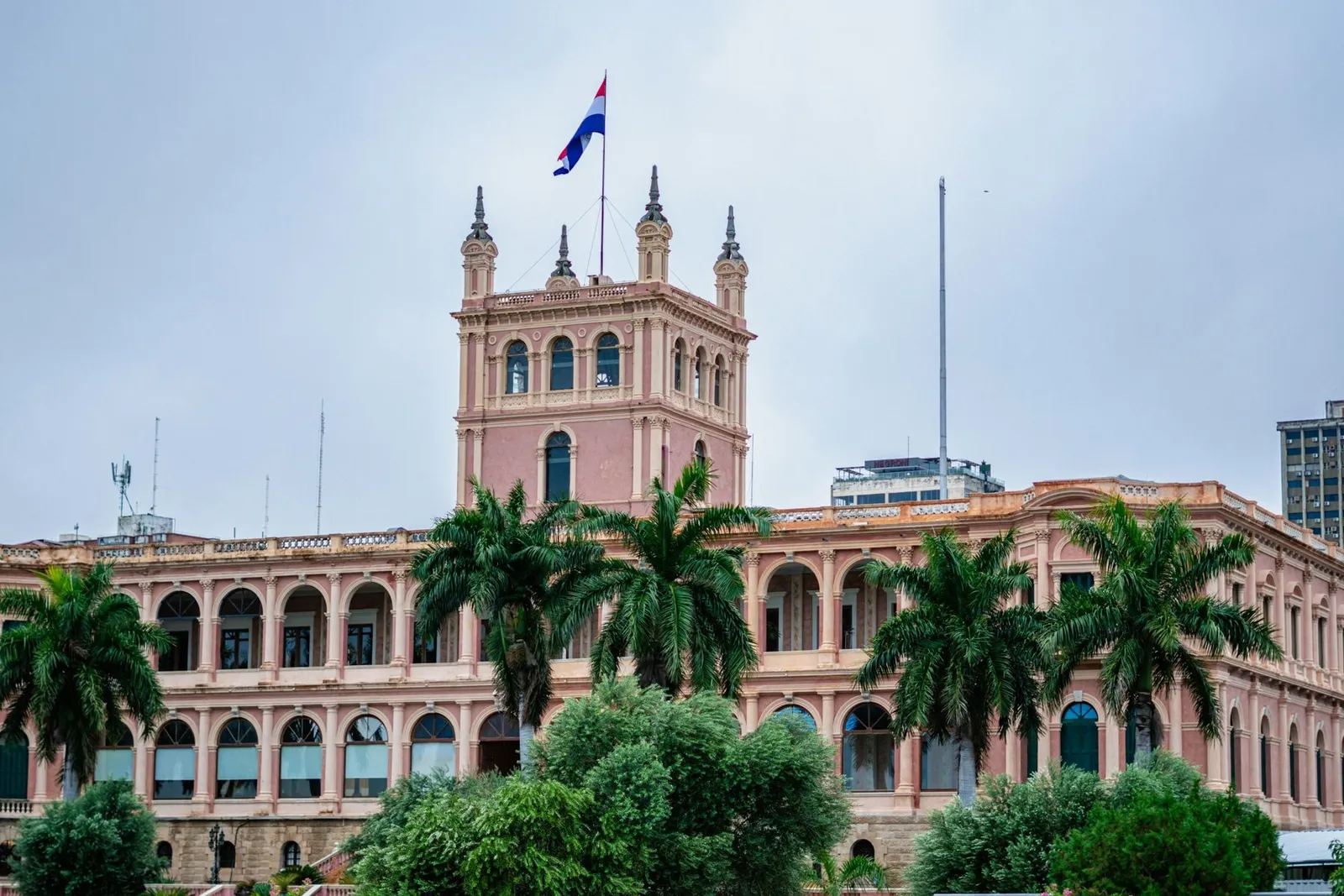
  • López Palace, seat of government, in Asunción

    Can foreigners buy property in Paraguay?

    Yes, with a passport and without residency. What Laws 117/91 and 2532/2005 say, how the border zone rule works and what buying does not give you.

    PAuthor: PeraltumPublished on 13 October 2026